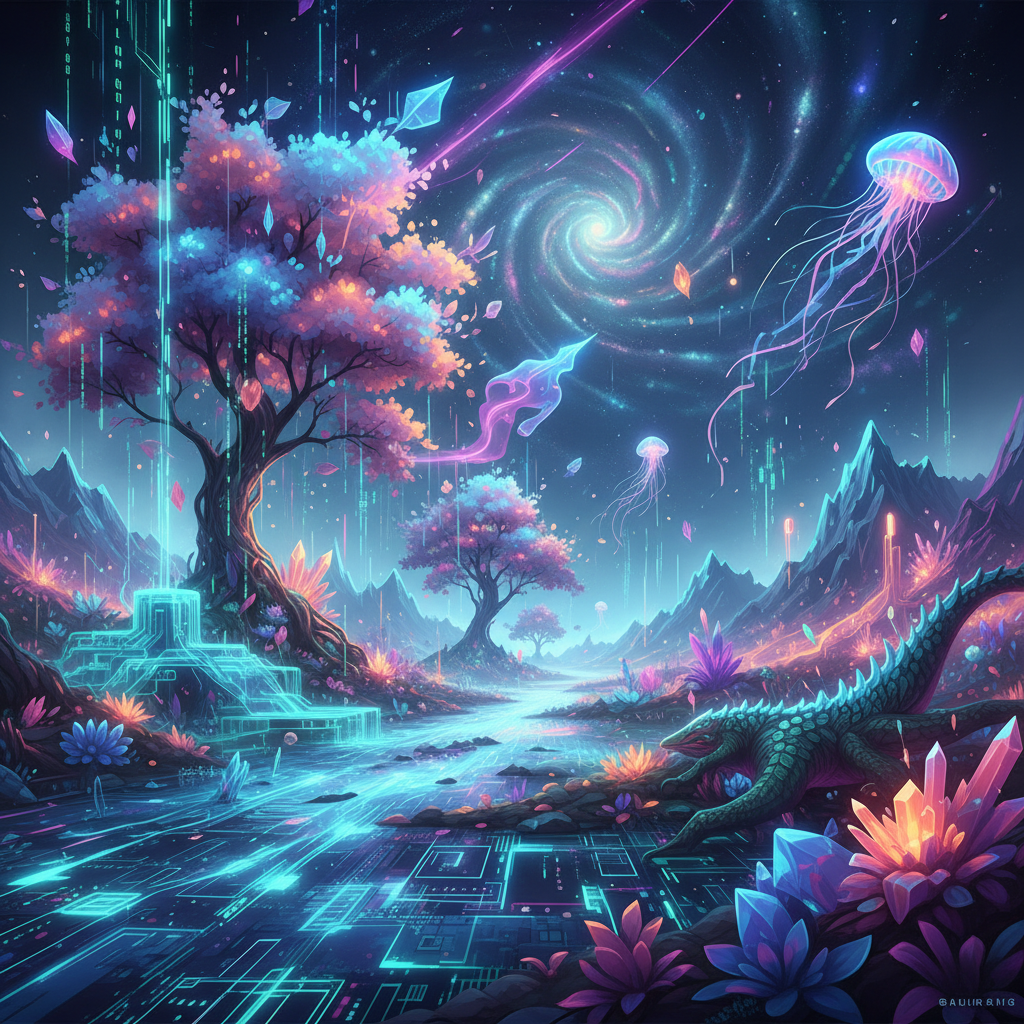
The year 2026 marks a pivotal moment for faceless content creators. Gone are the days of relying on generic stock photos to fill visual gaps; AI-generated visuals now offer an unparalleled opportunity to craft a distinct and memorable brand identity. These powerful tools allow creators to produce unique photorealistic scenes, captivating abstract art, and consistent illustrative elements, moving beyond anonymity to build a recognizable visual language. This guide explores the best AI visual generators and how to leverage them for your faceless brand.
- AI visual generators are categorized into photorealistic (Midjourney), illustrative (Leonardo AI), and abstract (Artbreeder) to suit different brand aesthetics.
- Full commercial usage rights are now standard on many platforms like DALL-E 3, making AI visuals a viable business tool.
- Maintaining brand consistency is achievable through advanced features like Midjourney’s style references (–sref) and consistent prompt engineering.
Which AI Visual Generators Are Best for Your Faceless Brand in 2026?

The landscape of AI visual generation is rapidly evolving, offering a diverse toolkit for creators. Understanding the strengths of each category—photorealistic, illustrative, and abstract—is crucial for developing a cohesive brand aesthetic that resonates with your audience. In 2026, these tools are not just for novelty; they are essential for establishing a unique visual identity in the competitive world of faceless content.
For Photorealistic Content: Midjourney, DALL-E 3, & Stable Diffusion
When your faceless content demands lifelike imagery, whether for lifestyle vlogs, educational explainers, or business-focused content, photorealistic AI generators are your go-to. Tools like Midjourney, DALL-E 3, and Stable Diffusion have reached new heights in realism and detail. Their widespread adoption is a testament to their power; Midjourney boasts over 16 million users as of 2024, while DALL-E 3 processes an astonishing 2 million images daily (OpenAI, 2024). Stable Diffusion has also seen massive uptake, with over 10 million downloads (Stability AI, 2024), underscoring their popularity and capability in generating high-fidelity visuals.
| Tool | Best For | Key 2026 Feature | Commercial Use Policy |
|---|---|---|---|
| Midjourney | Hyperrealistic scenes, artistic interpretations, lifestyle imagery | Advanced style reference (–sref) for aesthetic consistency | Commercial rights available with paid subscriptions ($10-60/month) |
| DALL-E 3 | Versatile photorealism, conceptual imagery, integration with ChatGPT | Enhanced prompt understanding and coherence | Full commercial usage rights included |
| Stable Diffusion | Customizable photorealism, fine-tuning models, open-source flexibility | Extensive community models and fine-tuning capabilities | Permissive open-source license for commercial use |
For Illustrative & Character-Based Visuals: Leonardo AI & Canva AI
For faceless brands that require a consistent character, unique icons, or branded illustrations, tools like Leonardo AI and Canva AI are indispensable. These platforms excel at generating repeatable elements that form the backbone of a strong visual identity. The key lies in mastering prompt engineering and utilizing features that allow for character consistency. For instance, by defining specific attributes in your prompts and leveraging seed values, you can ensure a character’s appearance remains stable across multiple image generations. This is particularly useful for creating mascots or consistent graphical elements for your faceless content. Leonardo AI offers a generous free tier with 150 daily tokens, making it an accessible starting point for creators to experiment with building a unique visual library. These tools are perfect for developing distinct icons, branded illustrations, and even cohesive visual themes for your channel.
For Abstract & Artistic Aesthetics: Deep Dream & Artbreeder
Some faceless brands thrive on a more unconventional, artistic approach. For these creators, abstract AI generators like Deep Dream Generator and Artbreeder offer a pathway to unique visual identities. These tools move beyond literal representation, producing mesmerizing patterns, textures, and artistic visuals that can make a faceless channel stand out dramatically. Artbreeder, for example, allows users to ‘breed’ and evolve images, creating truly one-of-a-kind outputs. This method is ideal for brands aiming for a strong, non-literal visual identity that immediately differentiates them from the sea of typical faceless content. By embracing abstract art, creators can build a powerful and memorable brand aesthetic that relies on mood, color, and form rather than specific subjects.
How Do You Create a Consistent Visual Identity with AI?
Establishing a consistent visual identity is paramount for any brand, and it’s especially critical for faceless content where visuals are the primary means of recognition. AI tools offer powerful features to achieve this, but they require a strategic approach. Mastering prompt engineering, utilizing specific AI functionalities, and building a reusable asset library are key steps in ensuring your faceless brand maintains a cohesive and professional look across all platforms.
Mastering Prompt Engineering for a Cohesive Brand Style
The foundation of visual consistency with AI generators lies in effective prompt engineering. This involves crafting detailed instructions that guide the AI to produce images adhering to your brand’s specific aesthetic. For instance, always define your brand’s color palette within the prompt, using hex codes or descriptive terms like “warm earthy tones” or “vibrant neon accents.” Specify the desired artistic style, whether it’s “minimalist line art,” “detailed watercolor,” or “cinematic photorealism.” Crucially, use consistent keywords across all your image generations. If your brand is associated with “futuristic technology,” ensure this term appears regularly in your prompts. This systematic approach helps AI tools understand and replicate your desired style, ensuring that every visual asset, from thumbnails to background elements, shares the same DNA.
- Define Color Palettes: Specify exact colors or general tones (e.g., “muted pastels,” “bold primary colors”).
- Specify Artistic Style: Clearly state the desired aesthetic (e.g., “flat vector illustration,” “gritty realism,” “anime-inspired”).
- Use Consistent Keywords: Integrate core brand themes and descriptors into every prompt.
- Set Mood and Lighting: Describe the atmosphere (e.g., “serene morning light,” “dramatic chiaroscuro”).
- Detail Composition: Guide the AI on framing and perspective (e.g., “wide-angle shot,” “close-up portrait”).
Using Built-in Style and Character Reference Features
Beyond basic prompt engineering, many AI visual generators in 2026 offer advanced features specifically designed to enhance stylistic and character consistency. Midjourney, for instance, features the powerful --sref parameter, which allows users to provide a reference image. The AI then analyzes this image’s style and applies it to new generations, ensuring a cohesive look across your visual assets. Similarly, Leonardo AI provides a “Style Reference” feature that achieves the same goal, enabling you to upload an image and have the AI mimic its aesthetic. For character consistency, beyond detailed prompts, utilizing seed values is also critical. A seed value is a number that initializes the AI’s generation process; using the same seed value with similar prompts can help reproduce similar characters or compositions, making it easier to maintain a recognizable mascot or recurring visual elements for your faceless brand.
Building a Reusable Visual Asset Library for Your Brand
To truly streamline your faceless content creation process and guarantee visual harmony, creators should focus on building a comprehensive library of reusable visual assets. This library should include on-brand icons, distinct background textures or scenes, variations of your brand mascot or character in different poses, and consistent thumbnail templates. By generating these assets systematically using AI tools and saving them for future use, you significantly cut down on creation time for each new piece of content. More importantly, it ensures that every video, social media post, or blog graphic shares the same visual DNA, reinforcing brand recognition and professionalism. This proactive approach addresses a common competitive gap, as many creators neglect the systematic development of a cohesive visual library, which is critical for standing out in crowded niches.
What Are the Commercial Realities of Using AI-Generated Visuals?
As AI-generated visuals become integral to faceless content creation, understanding the commercial implications, particularly regarding usage rights and cost-effectiveness, is essential for creators aiming to monetize their work. The landscape has shifted significantly, with many platforms now offering clear commercial usage policies that make AI visuals a viable and often superior alternative to traditional stock imagery.
A 2026 Breakdown of Commercial Usage Rights
Navigating the terms of service for AI image generators is crucial for ensuring you have the legal right to use the visuals in your monetized content. Fortunately, in 2026, the leading platforms generally provide clear pathways for commercial use. DALL-E 3, for example, includes full commercial usage rights as part of its service, making it a straightforward option for creators. Midjourney offers commercial rights but requires a paid subscription, with pricing typically ranging from $10 to $60 per month, depending on the plan. Stable Diffusion, being open-source, comes with a permissive commercial use license, offering great flexibility. Leonardo AI also provides commercial rights, typically included in its paid plans, though its free tier offers limited daily usage. This clarity allows creators to confidently integrate AI visuals into their business models.
| Tool | Commercial Rights Policy | Typical Cost |
|---|---|---|
| Midjourney | Commercial rights available with paid subscription | $10-60/month |
| DALL-E 3 | Full commercial usage rights included | Included with OpenAI service fees |
| Stable Diffusion | Open-source with a permissive commercial use license | Free (model), potential costs for hosting/APIs |
| Leonardo AI | Commercial rights included in paid plans | Free tier available; paid plans vary |
The Economic Case: AI Visuals vs. Traditional Stock Photos
The economic argument for adopting AI-generated visuals for faceless content is compelling, especially when compared to the costs and limitations of traditional stock photo services. Faceless YouTube channels, for instance, have demonstrated significant earning potential, with reports indicating monthly incomes ranging from $1,000 to $10,000+ (Business Insider, 2024). To achieve this level of success, creators need a constant stream of unique, high-quality visuals. Traditional stock photo subscriptions can become prohibitively expensive, especially when needing a large volume of diverse images. In contrast, a monthly subscription to an AI generator like Midjourney or Leonardo AI provides access to potentially unlimited, unique visual creation capabilities for a flat fee. This allows creators to develop a highly distinctive brand aesthetic without recurring per-image costs. The widespread adoption is evident, with 83% of marketers reporting the use of AI tools for content creation in 2024 (HubSpot, 2024), signaling a major industry shift away from traditional methods towards more efficient and customizable AI solutions. This makes AI visuals not just an alternative, but a strategic advantage for building a profitable faceless brand.
The most surprising finding is that cultivating a completely unique, commercially viable brand aesthetic is no longer an expensive or difficult endeavor, thanks to the accessibility and power of AI visual generators.
Choose one AI tool—like Leonardo AI with its free daily tokens—and dedicate 30 minutes today to creating a potential mascot or logo for your faceless brand. This hands-on approach will quickly demonstrate the creative possibilities and help you visualize your brand’s unique identity.
From creating stunning visuals for your faceless content to exploring advanced techniques in AI animation for faceless stories on YouTube and mastering AI content repurposing for your brand, AI empowers creators like never before. Discover the best AI tools specifically for faceless YouTubers to dominate the platform. If podcasting is your focus, explore our guide on AI for faceless podcasting.