
Businesses using AI for lead generation are seeing a significant boost: they capture 50% more leads at a 33% lower cost, according to Salesforce Research in 2026. This efficiency is driven by automating a three-stage funnel. By using faceless content like AI-generated videos and articles, businesses can effectively attract potential customers, capture their contact information, and then nurture them through personalized communication, a strategy that aligns with the principles of selling AI-generated content for maximum profit.
- Proven ROI: Companies using AI-powered lead generation report 50% more leads and a 33% reduction in cost per lead, according to Salesforce Research.
- Video Dominance: AI-generated faceless videos are critical, as 84% of consumers report being convinced to buy a product after watching a brand’s video (Wyzowl 2026).
- Funnel Strategy: The most effective method involves a 3-stage funnel: using AI content for Attraction, automated lead magnets for Capture, and personalized email sequences for Nurturing.
How Does AI Content Directly Increase Lead Generation?
AI content creation is revolutionizing lead generation by enabling businesses to scale their efforts dramatically and personalize outreach at an unprecedented level. This dual approach directly impacts the volume and quality of leads generated, making it a cornerstone of modern marketing strategies.
Achieving 50% More Leads at a 33% Lower Cost
The core statistic from Salesforce Research in 2026 highlights a significant shift: AI-powered lead generation delivers 50% more leads while simultaneously reducing costs by 33%. This is primarily achieved through massive scalability. AI tools can drastically cut down content creation time. For instance, what might take 4 hours to write manually as a blog post can be assisted by AI in just 1 hour, according to McKinsey. This 50-70% reduction in content creation time means businesses can produce a much higher volume of content. More content, distributed across various channels, naturally leads to more opportunities for potential customers to discover and engage with your brand, directly impacting lead flow.
Leveraging Faceless Video That Generates 1200% More Shares
Faceless videos, often created using AI, are a powerful tool for attracting attention at the top of the sales funnel. Video content, in general, is incredibly effective; it generates 1200% more shares than text and images combined, according to Brightcove. Furthermore, Wyzowl’s 2026 statistics show that 84% of consumers have been convinced to purchase a product or service after watching a brand’s video. The rise of faceless content is particularly noteworthy, with a 200% year-over-year growth observed on platforms like YouTube and TikTok, as reported by Social Media Today in 2026, offering excellent opportunities for monetizing faceless TikTok accounts. This trend indicates a strong audience appetite for visually engaging, brand-focused content that doesn’t necessarily require on-screen talent, making it an ideal format for AI-driven lead generation campaigns.
Driving a $36 ROI for Every $1 Spent with Automated Nurturing
Beyond initial attraction, AI plays a crucial role in nurturing leads through automated communication, particularly email marketing. The Data & Marketing Association reported in 2026 that email marketing delivers an impressive $36 ROI for every $1 spent. AI can generate hyper-personalized email sequences tailored to individual lead behaviors and preferences. Mailchimp data indicates that automated email sequences achieve 70.5% higher open rates compared to single sends. Moreover, segmented email campaigns, which AI can help create and manage, can drive a substantial 760% increase in revenue, as shown by Campaign Monitor. This integration of AI-generated content into email marketing ensures that potential customers remain engaged and move closer to conversion.
What Is the 3-Stage Funnel for AI-Powered Lead Generation?
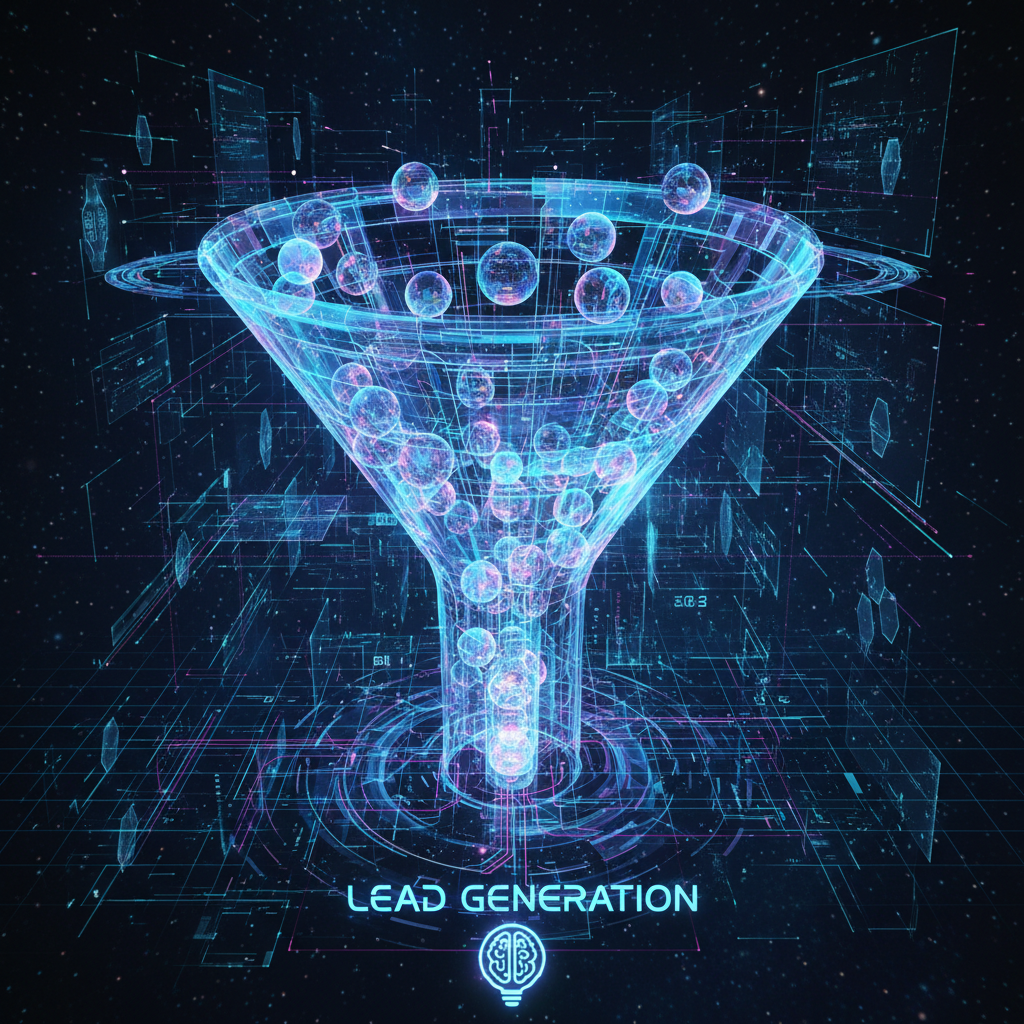
Implementing an effective AI-powered lead generation strategy relies on a structured, three-stage funnel designed to attract, capture, and nurture potential customers. This systematic approach maximizes the impact of AI-generated content and automation tools.
Stage 1 (Attraction): Using AI Faceless Videos and Blogs to Capture Attention
The initial stage focuses on drawing in potential leads by creating a high volume of engaging content. AI tools make this process highly efficient. For example, tools like Pictory can transform a single blog post into up to 10 different videos in under 10 minutes, perfect for platforms like TikTok and YouTube Shorts. AI writing assistants such as Jasper, used by over 100,000 marketers, can also rapidly produce SEO-optimized blog posts and social media updates, supporting the creation of faceless digital products with AI. The goal is to be visible where your audience spends their time. Data from the Demand Gen Report indicates that 47% of buyers view 3-5 pieces of content before they are ready to engage with a sales representative, making consistent, valuable content crucial for capturing their initial interest.
Stage 2 (Capture): Automating Lead Magnets and High-Converting Opt-in Forms
Once potential leads are attracted, the next step is to capture their contact information. This is typically done through lead magnets—valuable resources offered in exchange for an email address. AI can assist in generating the content for these lead magnets, such as eBooks or checklists. Tools like Leadpages and Unbounce are instrumental in creating high-converting opt-in forms and landing pages. Leadpages, for instance, boasts an average conversion rate of 11.7%, significantly higher than the industry average of 4.4%. AI-driven personalization can further enhance these rates, with AI-personalized landing pages potentially seeing a 15-20% improvement in conversion rates. This stage is vital for building your contact list, and content marketing, in general, offers a cost-per-lead (CPL) that is 3x lower than paid search advertising.
Stage 3 (Nurture): Deploying Personalized Email Sequences with AI
The final stage of the funnel involves nurturing captured leads to move them towards becoming paying customers. This is where AI’s ability to personalize communication shines. AI writing tools can integrate with email marketing platforms like ActiveCampaign or ConvertKit to create segmented and highly personalized email campaigns. In today’s market, personalization is not just a preference but a necessity; 72% of consumers now only engage with personalized messaging, according to SmarterHQ. Automated lead nurturing processes, powered by AI, generate 50% more sales-ready leads, as reported by Forrester Research. Furthermore, companies that effectively utilize marketing automation see their conversion rates increase by 53%, as noted by HubSpot, demonstrating the power of AI in guiding leads through the sales journey.
How Do You Maintain Authenticity While Using AI for Lead Generation?

While the efficiency of AI in lead generation is undeniable, a significant portion of consumers express concerns about AI-generated content. Addressing these concerns proactively is key to building trust and ensuring long-term success.
Addressing the 60% of Consumers Concerned About AI Content
A Forbes Advisor report in 2026 revealed that 60% of consumers are concerned about AI-generated content. To counter this, businesses must adopt a strategic approach. One effective method is to use AI as a powerful ‘first draft’ assistant, with human oversight and editing crucial for refining the output. Training AI models on your specific brand voice and style ensures consistency and authenticity. Additionally, adhering to FTC guidelines is essential. Where AI-generated content is used in advertising or endorsements, disclosure may be required to maintain transparency. Authenticity remains a critical factor, with 86% of consumers stating it’s key to their brand choices (Stackla).
Focusing on Value and Personalization to Build Trust
Ultimately, the method of content creation—whether human or AI—is less important to consumers than the value and relevance of the content itself. Brands that focus on delivering highly personalized and valuable experiences can overcome potential skepticism about AI. Trust is foundational, with 81% of consumers needing to trust a brand before making a purchase, according to the Edelman Trust Barometer. By ensuring that AI-generated content is tailored to individual needs and preferences, businesses can foster stronger relationships. As Twilio Segment noted in 2026, 63% of consumers prefer to buy from brands that offer personalized content experiences. When AI enables this level of relevance, the method of creation becomes secondary to the benefit received.
The most surprising finding is the dramatic ROI AI content systems can achieve when focused on automated email nurturing. When AI-generated content fuels these sequences, the return can skyrocket to $36 for every $1 spent, highlighting the potential for passive income with AI content automation. This week, take a concrete step: use an AI writer to generate a 5-part email sequence for your top lead magnet. The potential ROI is simply too high to ignore.