Creating a professional AI avatar is a straightforward four-step process for any faceless creator. This guide provides a complete walkthrough, from initial design to final video production, using the latest 2026 tools to establish your unique digital persona, and you can speed up production: the best AI video editing for anonymous creators.
- The process involves four phases: Concept Design, Tool Selection, Avatar Customization, and Content Animation.
- For commercial use without watermarks, expect to budget $25-$90/month for tools like HeyGen or Synthesia.
- Video content featuring an avatar sees an average of 40% higher engagement than static content.
- You can choose between photorealistic, 3D/metaverse, or animated photo styles depending on your brand’s needs.
The 4-Step Process for AI Avatar Creation


Phase 1: Define Your Brand Persona and Avatar Style
The initial concept phase is crucial for building a recognizable brand identity. As a faceless creator, your AI avatar becomes the face of your operation. Start by clearly defining your brand’s personality. Are you an expert sharing in-depth knowledge, a friendly guide offering simple tips, or a humorous commentator? This personality will dictate the avatar’s appearance and tone. Once you have a personality profile, choose a corresponding avatar style. Options include photorealistic avatars for a trustworthy, authoritative feel; 2D cartoon avatars for a more approachable or stylized look; or 3D/metaverse avatars for gaming and virtual environments. Creating a simple style guide, even with just a few key points on color palettes and preferred clothing styles, will ensure consistency across all your content. This consistency is vital, as 73% of marketers report that a consistent visual identity significantly increases brand recognition.
Phase 2: Select and Budget for the Right AI Avatar Tool
Choosing the correct AI avatar tool depends on your specific needs and budget. For creators focusing on professional video presentations and educational content, platforms like Synthesia and HeyGen are excellent choices. D-ID specializes in bringing still images to life, while Ready Player Me focuses on creating interoperable 3D avatars for the metaverse.
| Tool Name | Best For (Use Case) | Commercial Plan Cost |
|---|---|---|
| HeyGen | Photorealistic avatars, custom avatars, brand kit | Creator: $24/mo+ |
| Synthesia | Photorealistic avatars, extensive language support, large avatar library | Personal: $22/mo (Limited commercial use) Enterprise: Custom |
| D-ID | Animating still photos into video presenters | Pro: $29.25/mo |
| Ready Player Me | Interoperable 3D avatars for metaverse/gaming | Free for personal use; commercial licensing available for developers |
[P2]
Paid plans are essential for any serious creator intending to use their avatar for commercial purposes. Free tiers typically include watermarks, lower video quality, and restricted usage rights, which are unsuitable for professional branding. For instance, the HeyGen Creator plan starts at $24/mo, providing basic commercial rights. Synthesia offers over 140 stock avatars and supports more than 120 languages, making it a robust option for global reach. D-ID’s Pro plan is $29.25/mo and includes a commercial license, ideal for animating existing images. Ready Player Me is free for personal use, but commercial licensing is necessary for business applications.
Phase 3: Customize Your Avatar from Stock or a Custom Upload
Once you’ve selected your tool, the next step is creating or customizing your avatar. Most platforms offer a library of pre-made stock avatars. These are the quickest way to get started; for example, Synthesia provides over 140 diverse stock avatars, and HeyGen offers more than 100 pre-made options. Using a stock avatar allows you to generate content rapidly without needing to create a unique visual identity from scratch.
[P3]
Alternatively, many tools allow you to upload your own photo or video to create a custom avatar. This is ideal for creators who want their digital persona to closely resemble a specific look or even themselves, without revealing their face. The customization process typically involves adjusting facial features, selecting clothing, and choosing a voice. You can opt for a standard text-to-speech voice provided by the platform, or if your chosen tool supports it, you might be able to upload a cloned version of your own voice for a more personal touch. This level of customization helps ensure your avatar aligns perfectly with your brand’s aesthetic and messaging.
Phase 4: Animate Your Avatar with Scripts and Nuances
The final step in bringing your AI avatar to life is animation. This involves inputting the text you want your avatar to speak into the platform’s text-to-speech engine. The AI then generates the audio and animates the avatar’s mouth and facial expressions to match the speech. To make your avatar appear more natural and less robotic, most platforms offer features to add human-like nuances. These can include adjusting the pace of speech, adding pauses at strategic points in the script, selecting different tones of voice, and incorporating subtle gestures or facial expressions. Experimenting with these options is key to creating engaging video content. Once you are satisfied with the animation and audio, you can export the final video for use across your platforms.
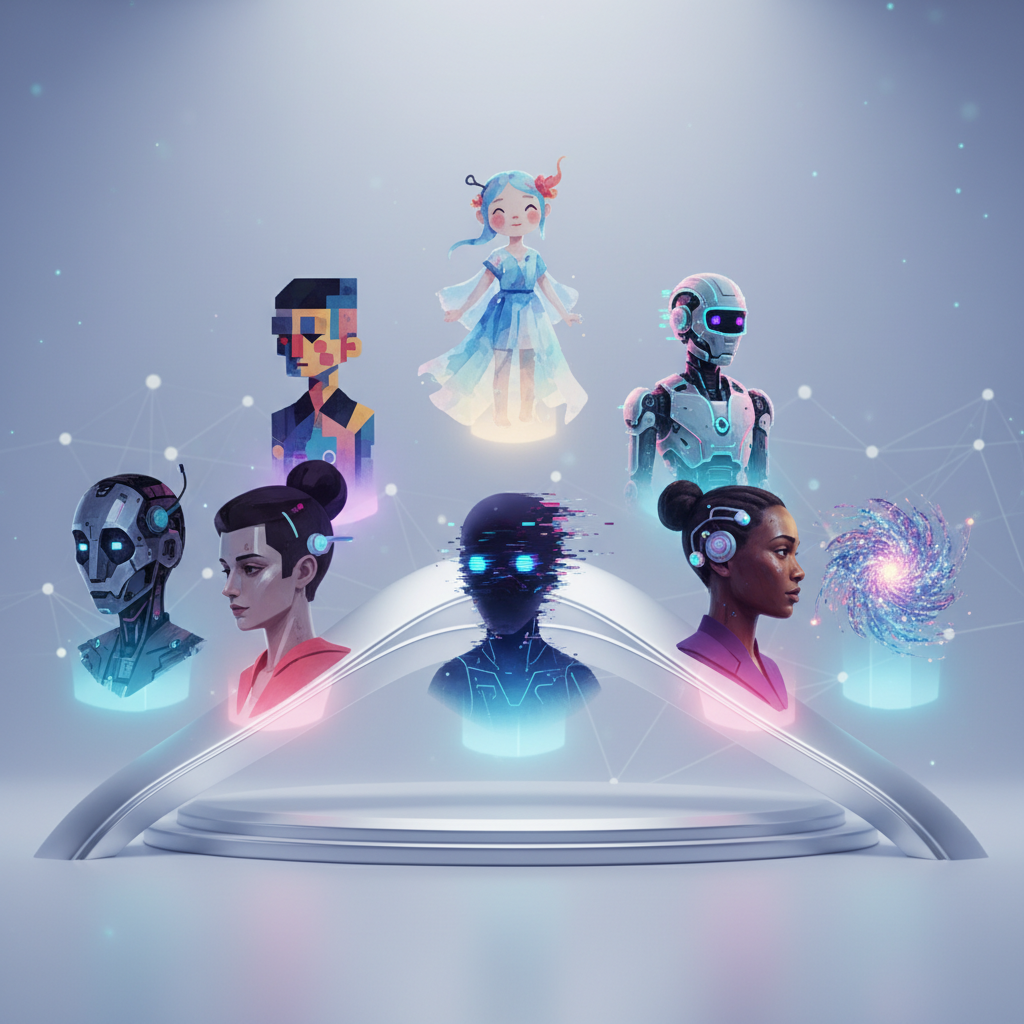
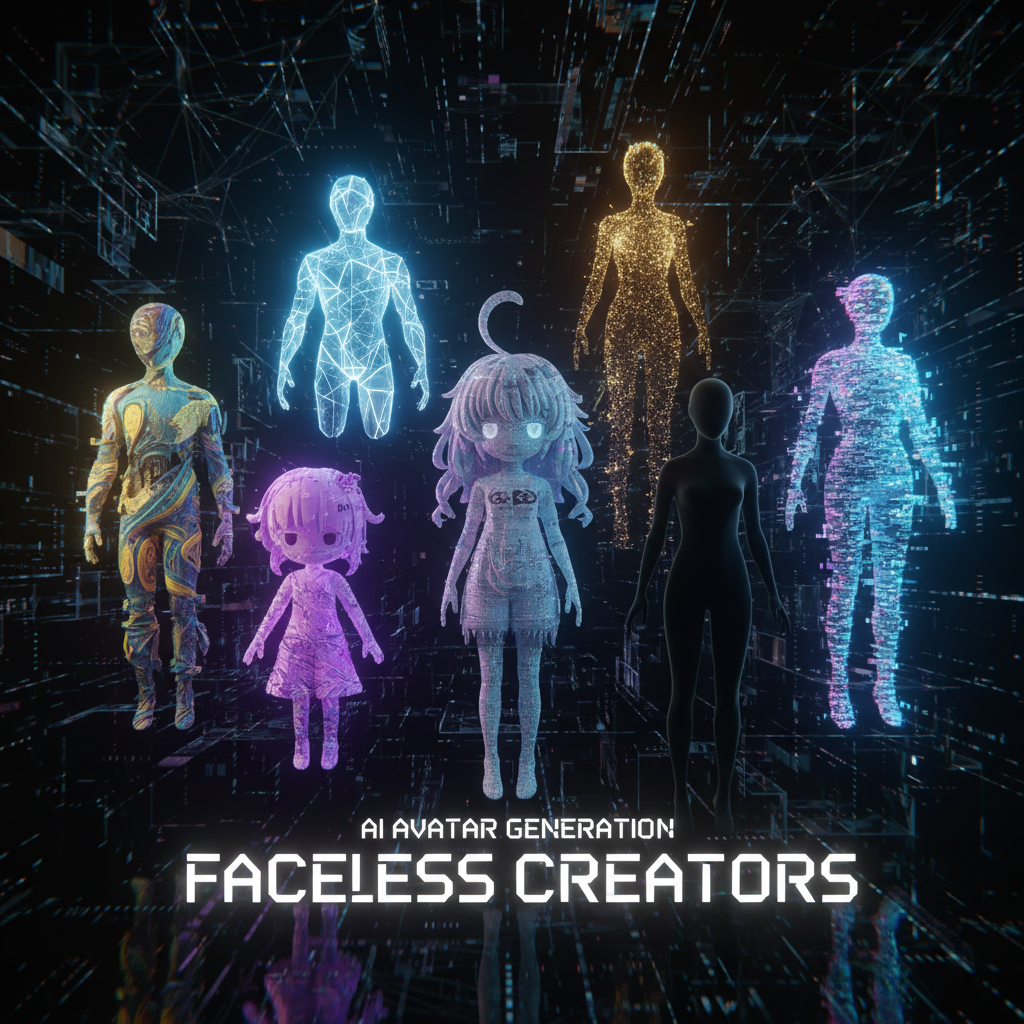
Which AI Avatar Style Best Fits Your Faceless Brand?
Photorealistic Video Avatars: For Building Authority and Trust
Photorealistic AI avatars are an excellent choice for creators aiming to establish authority and build trust with their audience. This style is particularly effective for educational content, corporate presentations, product reviews, and any niche where a sense of expertise and reliability is paramount. Platforms like Synthesia, HeyGen, and Hour One excel in creating these lifelike digital presenters. Synthesia’s ability to support over 120 languages makes it a powerful tool for creators targeting a global audience, allowing for localized content delivery. For brands needing a highly consistent visual identity, HeyGen’s Business plan, priced at $72/mo, includes a brand kit feature that helps maintain uniform branding elements across all avatar videos. These avatars convey a professional image, making your faceless brand appear more credible and established.
Animated Photo Avatars: For Quick and Simple Video Messages
If you need a fast and budget-friendly way to add motion to your content, animating a still photo is an ideal solution. This approach is perfect for creators who want to deliver video messages without the complexity of full 3D animation or the cost of advanced photorealistic avatars. Tools like D-ID specialize in this area, allowing you to upload a static image and turn it into a talking head video. This method is great for social media posts, short explainer videos, or adding a dynamic element to presentations. The D-ID Pro plan, available for $29.25/mo, includes a commercial license, making it a cost-effective option for creators who want to use animated photos in their branded content. It offers a simple yet effective way to make your static visuals more engaging.
3D & Metaverse Avatars: For Gaming, VR, and Community-Focused Brands
For creators operating in the gaming, virtual reality (VR), or metaverse spaces, 3D avatars are the natural choice. These avatars are designed for immersive digital environments and often prioritize interoperability, meaning they can be used across different virtual platforms. Ready Player Me is a leading platform focused on creating these interoperable 3D avatars for the metaverse. While Ready Player Me offers its avatars for free for personal use, developers and businesses looking to integrate these assets into their commercial projects will need to explore their commercial licensing options. Avaturn is another platform that allows for the creation of highly customizable 3D avatars, often from user-uploaded photos, suitable for virtual worlds and gaming applications. These avatars are essential for building a presence in digital spaces where identity is fluid and visually dynamic.
Is Investing in AI Avatar Creation Worth It in 2026?
The Financial Return: Earning Potential of $1,000 to $10,000+ per Month
Investing in an AI avatar can be a strategic move for faceless creators looking to monetize their content. Established faceless YouTube channels, for example, can generate substantial income, ranging from $1,000 to $10,000+ per month through ad revenue, affiliate marketing, sponsorships, and merchandise sales. While the cost of AI avatar software can range from $24/mo to over $72/mo for advanced features, this expense should be viewed as an investment. The ability to consistently produce engaging video content with a professional-looking digital persona can significantly boost channel growth and, consequently, earning potential. By leveraging AI avatars, creators can streamline their production process and focus on scaling their content strategy to achieve these financial goals.
The Engagement Data: A 40% Lift in Viewer Interaction
The impact of using a visual AI avatar on audience engagement is significant. Data from Wyzowl in 2024 indicates that video content featuring a visual avatar sees 40% higher engagement on average compared to content that is text-only or uses static images. This increase in viewer interaction can translate into better algorithm performance across platforms like YouTube, TikTok, and Instagram, leading to wider reach and faster channel growth. Higher engagement means viewers are more likely to watch longer, comment, share, and subscribe, all of which are crucial metrics for success on content platforms. By incorporating an AI avatar, creators can make their videos more dynamic and captivating, fostering a stronger connection with their audience and driving better overall performance for their faceless content.
[P4]
The AI avatar market is projected to become a half-trillion dollar industry by 2030, confirming this is a major, long-term trend. Your first step is to open a document and define your brand’s personality in three words—this will guide every decision you make in creating your digital persona, especially when considering automating social media with faceless AI content.
- The process involves four phases: Concept Design, Tool Selection, Avatar Customization, and Content Animation.
- For commercial use without watermarks, expect to budget $25-$90/month for tools like HeyGen or Synthesia.
- Video content featuring an avatar sees an average of 40% higher engagement than static content.
- You can choose between photorealistic, 3D/metaverse, or animated photo styles depending on your brand’s needs.
The 4-Step Process for AI Avatar Creation
Phase 1: Define Your Brand Persona and Avatar Style
The initial concept phase is crucial for building a recognizable brand identity. As a faceless creator, your AI avatar becomes the face of your operation. Start by clearly defining your brand’s personality. Are you an expert sharing in-depth knowledge, a friendly guide offering simple tips, or a humorous commentator? This personality will dictate the avatar’s appearance and tone. Once you have a personality profile, choose a corresponding avatar style. Options include photorealistic avatars for a trustworthy, authoritative feel; 2D cartoon avatars for a more approachable or stylized look; or 3D/metaverse avatars for gaming and virtual environments. Creating a simple style guide, even with just a few key points on color palettes and preferred clothing styles, will ensure consistency across all your content. This consistency is vital, as 73% of marketers report that a consistent visual identity significantly increases brand recognition.
Phase 2: Select and Budget for the Right AI Avatar Tool
Choosing the correct AI avatar tool depends on your specific needs and budget. For creators focusing on professional video presentations and educational content, platforms like Synthesia and HeyGen are excellent choices. D-ID specializes in bringing still images to life, while Ready Player Me focuses on creating interoperable 3D avatars for the metaverse.
| Tool Name | Best For (Use Case) | Commercial Plan Cost |
|---|---|---|
| HeyGen | Photorealistic avatars, custom avatars, brand kit | Creator: $24/mo+ |
| Synthesia | Photorealistic avatars, extensive language support, large avatar library | Personal: $22/mo (Limited commercial use) Enterprise: Custom |
| D-ID | Animating still photos into video presenters | Pro: $29.25/mo |
| Ready Player Me | Interoperable 3D avatars for metaverse/gaming | Free for personal use; commercial licensing available for developers |
Paid plans are essential for any serious creator intending to use their avatar for commercial purposes. Free tiers typically include watermarks, lower video quality, and restricted usage rights, which are unsuitable for professional branding. For instance, the HeyGen Creator plan starts at $24/mo, providing basic commercial rights. Synthesia offers over 140 stock avatars and supports more than 120 languages, making it a robust option for global reach. D-ID’s Pro plan is $29.25/mo and includes a commercial license, ideal for animating existing images. Ready Player Me is free for personal use, but commercial licensing is necessary for business applications.
Phase 3: Customize Your Avatar from Stock or a Custom Upload
Once you’ve selected your tool, the next step is creating or customizing your avatar. Most platforms offer a library of pre-made stock avatars. These are the quickest way to get started; for example, Synthesia provides over 140 diverse stock avatars, and HeyGen offers more than 100 pre-made options. Using a stock avatar allows you to generate content rapidly without needing to create a unique visual identity from scratch.
Alternatively, many tools allow you to upload your own photo or video to create a custom avatar. This is ideal for creators who want their digital persona to closely resemble a specific look or even themselves, without revealing their face. The customization process typically involves adjusting facial features, selecting clothing, and choosing a voice. You can opt for a standard text-to-speech voice provided by the platform, or if your chosen tool supports it, you might be able to upload a cloned version of your own voice for a more personal touch. This level of customization helps ensure your avatar aligns perfectly with your brand’s aesthetic and messaging.
Phase 4: Animate Your Avatar with Scripts and Nuances
The final step in bringing your AI avatar to life is animation. This involves inputting the text you want your avatar to speak into the platform’s text-to-speech engine. The AI then generates the audio and animates the avatar’s mouth and facial expressions to match the speech. To make your avatar appear more natural and less robotic, most platforms offer features to add human-like nuances. These can include adjusting the pace of speech, adding pauses at strategic points in the script, selecting different tones of voice, and incorporating subtle gestures or facial expressions. Experimenting with these options is key to creating engaging video content. Once you are satisfied with the animation and audio, you can export the final video for use across your platforms.
Which AI Avatar Style Best Fits Your Faceless Brand?
Photorealistic Video Avatars: For Building Authority and Trust
Photorealistic AI avatars are an excellent choice for creators aiming to establish authority and build trust with their audience. This style is particularly effective for educational content, corporate presentations, product reviews, and any niche where a sense of expertise and reliability is paramount. Platforms like Synthesia, HeyGen, and Hour One excel in creating these lifelike digital presenters. Synthesia’s ability to support over 120 languages makes it a powerful tool for creators targeting a global audience, allowing for localized content delivery. For brands needing a highly consistent visual identity, HeyGen’s Business plan, priced at $72/mo, includes a brand kit feature that helps maintain uniform branding elements across all avatar videos. These avatars convey a professional image, making your faceless brand appear more credible and established.
Animated Photo Avatars: For Quick and Simple Video Messages
If you need a fast and budget-friendly way to add motion to your content, animating a still photo is an ideal solution. This approach is perfect for creators who want to deliver video messages without the complexity of full 3D animation or the cost of advanced photorealistic avatars. Tools like D-ID specialize in this area, allowing you to upload a static image and turn it into a talking head video. This method is great for social media posts, short explainer videos, or adding a dynamic element to presentations. The D-ID Pro plan, available for $29.25/mo, includes a commercial license, making it a cost-effective option for creators who want to use animated photos in their branded content. It offers a simple yet effective way to make your static visuals more engaging.
3D & Metaverse Avatars: For Gaming, VR, and Community-Focused Brands
For creators operating in the gaming, virtual reality (VR), or metaverse spaces, 3D avatars are the natural choice. These avatars are designed for immersive digital environments and often prioritize interoperability, meaning they can be used across different virtual platforms. Ready Player Me is a leading platform focused on creating these interoperable 3D avatars for the metaverse. While Ready Player Me offers its avatars for free for personal use, developers and businesses looking to integrate these assets into their commercial projects will need to explore their commercial licensing options. Avaturn is another platform that allows for the creation of highly customizable 3D avatars, often from user-uploaded photos, suitable for virtual worlds and gaming applications. These avatars are essential for building a presence in digital spaces where identity is fluid and visually dynamic.
Is Investing in AI Avatar Creation Worth It in 2026?
The Financial Return: Earning Potential of $1,000 to $10,000+ per Month
Investing in an AI avatar can be a strategic move for faceless creators looking to monetize their content. Established faceless YouTube channels, for example, can generate substantial income, ranging from $1,000 to $10,000+ per month through ad revenue, affiliate marketing, sponsorships, and merchandise sales. While the cost of AI avatar software can range from $24/mo to over $72/mo for advanced features, this expense should be viewed as an investment. The ability to consistently produce engaging video content with a professional-looking digital persona can significantly boost channel growth and, consequently, earning potential. By leveraging AI avatars, creators can streamline their production process and focus on scaling their content strategy to achieve these financial goals.
The Engagement Data: A 40% Lift in Viewer Interaction
The impact of using a visual AI avatar on audience engagement is significant. Data from Wyzowl in 2024 indicates that video content featuring a visual avatar sees 40% higher engagement on average compared to content that is text-only or uses static images. This increase in viewer interaction can translate into better algorithm performance across platforms like YouTube, TikTok, and Instagram, leading to wider reach and faster channel growth. Higher engagement means viewers are more likely to watch longer, comment, share, and subscribe, all of which are crucial metrics for success on content platforms. By incorporating an AI avatar, creators can make their videos more dynamic and captivating, fostering a stronger connection with their audience and driving better overall performance for their faceless content.
The AI avatar market is projected to become a half-trillion dollar industry by 2030, confirming this is a major, long-term trend. Your first step is to open a document and define your brand’s personality in three words—this will guide every decision you make in creating your digital persona, especially when considering automating social media with faceless AI content.